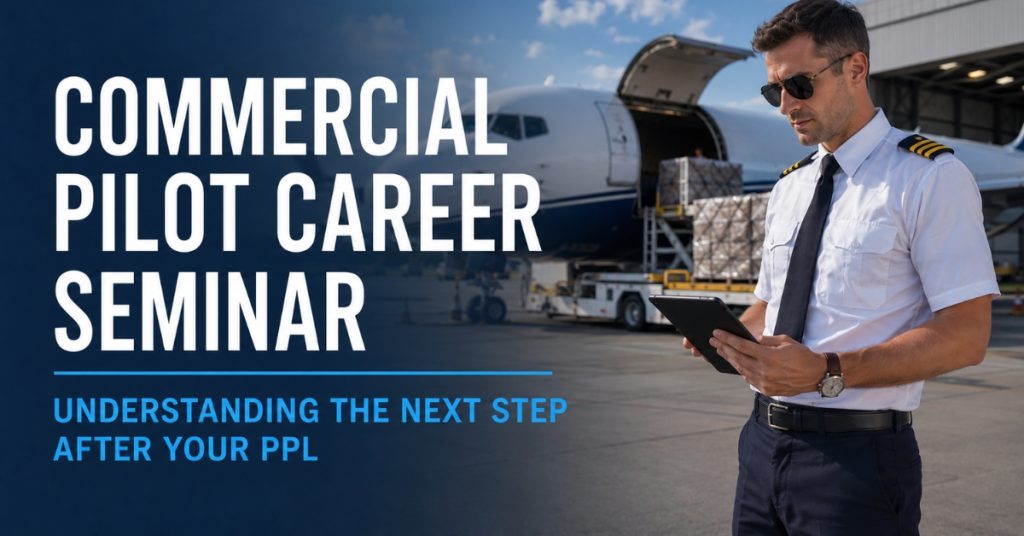




Commercial Pilot Career Seminar: Understanding the Next Step After Your PPL
31 July 2026
What You Can Learn at Our September 19 Open House
We’re hosting our September 19 Open House because people deserve a clear understanding of flight training before deciding how it fits into their lives.
You may want to fly for personal enjoyment, be considering a career as a pilot, or simply be curious about aviation. Wherever you are starting, our information session at Executive Compass Flight Institute is intended to help you understand the options and ask the questions that matter to you.
There is plenty to read online about licences, training hours and costs. What can be harder to find is an explanation of how those pieces fit together, especially when your schedule, experience or goals differ from someone else’s. That is where a conversation can help.
Understand the different paths into flying
One of the most useful things you can learn early on is how your reason for flying shapes your training decisions.
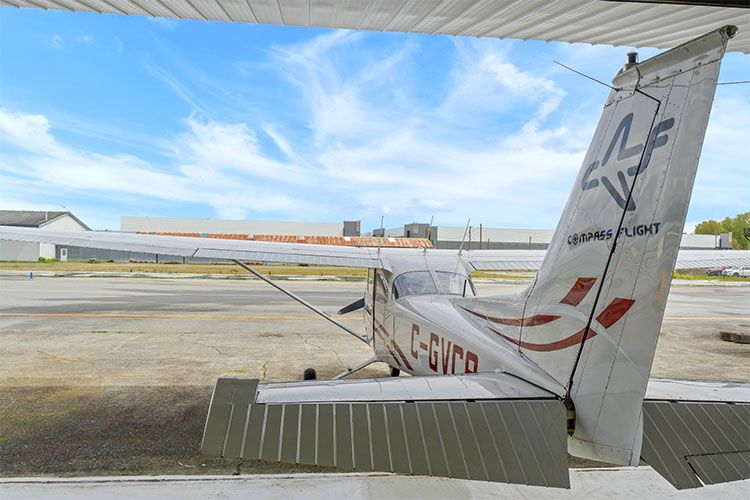
If your interest is recreational flying, understanding the route to flying for personal enjoyment can help you focus on the training relevant to that goal. You can explore what learning involves, how flying might fit around work or family, and what continuing to develop your skills could look like.
If you are considering becoming a professional pilot, it helps to see the longer progression. We want to help you understand how initial training, further qualifications and experience can fit into a career plan, so you can think beyond the first licence and ask informed questions about the commitment ahead.
And if you do not yet know which direction interests you, learning about both can give you a useful starting point. You are welcome to come with curiosity and work out your goals as you learn.
See what training would involve in your life
A training pathway becomes more useful when you can connect it to everyday decisions. How do ground school and flight lessons fit together? How much time should you set aside for studying? What should you consider when planning a budget?
Our aim is to give you a framework for thinking through these questions. Understanding how lesson frequency, weather and individual progress can affect training helps you form more realistic expectations about the time and money involved.
This knowledge also helps you make better use of the information you find later. You can compare training options more thoughtfully, recognise what a cost estimate includes, and identify what you still need to clarify before getting started.
Ask the questions that matter to you
General information is a starting point. Your own circumstances deserve attention, too.
Perhaps you work full time and want to understand how training could fit around your availability. You might be thinking about a career change, wondering what background knowledge you need, or trying to decide whether to explore flying before committing to a longer plan.
Bring those questions. The opportunity to ask a follow-up, explain your situation and talk through an answer is an important part of why we are holding this session. Hearing other attendees’ questions may also bring up something you had not thought to ask.
Leave with a clearer next step
We hope you leave with a better understanding of what you want from flying and what to do next. That might mean exploring an introductory flight, working out a practical training schedule, or taking more time to consider how aviation fits into your future.
You do not need to arrive with a decision already made. Giving yourself the information to make that decision is a worthwhile reason to attend.
Join us on September 19. We look forward to hearing your questions and helping you make sense of the path ahead.
Whether you’re considering a future in aviation or simply curious about what flight training looks like, this is a wonderful opportunity to explore our school, meet our team, and experience the atmosphere firsthand.ECFI Open House - Pitt Meadows (2026 Sept)